IACT College Sweeps All Three Raintown Horizons Awards at the 3rd Raintown Film Festival 2026

What Happens When Creative Education Meets a Real Industry Brief?
By Ashna, Digital Marketing Executive
What happens when students are asked to create not simply for a classroom assessment, but for an audience beyond the classroom?
A creative idea can look compelling on paper. The harder part is turning that idea into something that can survive a real production process — working with a team, managing a timeline, responding to an industry brief and making decisions when things do not go exactly as planned.
That was the starting point for Raintown Horizons: The IACT × WCE Student Cinematic Showcase, a collaboration between IACT College, West Coast Expressway (WCE) and the Raintown Film Festival. Students were challenged to develop original narrative short films while responding to a real industry brief and retaining the creative freedom to tell authentic Malaysian stories.
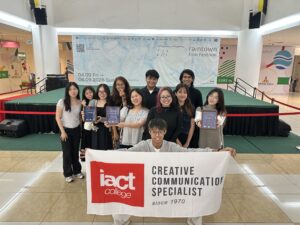
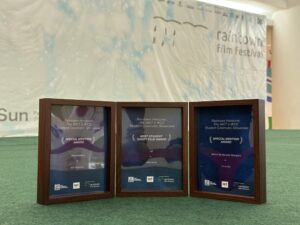
The result was significant. At the 3rd Raintown Film Festival 2026 in Taiping, Perak, IACT College students claimed all three awards presented in the Raintown Horizons tertiary student competition. Off received the Best Student Short Film Award, while Before We Became Strangers and Nevertheless received Special Mention Awards.
But the three awards are only the visible part of the story. The more interesting question is what happened before the awards — and what the experience tells us about the way creative education prepares students for work beyond the classroom.
Setting the Stage
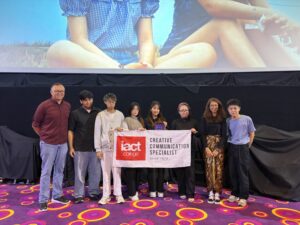
The project brought together more than 46 IACT students across eight production teams. Over seven weeks, the teams developed original narrative short films exploring themes including healing, heritage and human connection.
The brief was deliberately different from conventional commercial work. Students were given a real industry context, but they were not asked to produce one predetermined answer. They had to interpret the brief, decide what story they wanted to tell and determine how that story could be brought to life.
That distinction matters. In a classroom, the learning objectives are usually clear. A real brief introduces another layer of uncertainty. Students have to make choices, communicate those choices and live with the consequences of them.
The experience therefore became more than a filmmaking exercise. It became an opportunity to see what happens when students are given both creative freedom and responsibility.
From the Production Floor
A film rarely moves from script to screen without changes along the way. Ideas are revised. Schedules become tighter. Locations create new considerations. A scene that works on paper may have to be approached differently once the team is actually on location.
Ms. Ain Syafiqah Binti Rosdi, Supervising Lecturer from the School of Digital Media Production, reflected on this reality when she spoke about the teams’ early script revisions, tight production timelines and location shooting. The students also had to balance client expectations with creative freedom.
These are familiar challenges in professional production. What matters is how teams respond to them.
A strong creative team is not necessarily one that never encounters a problem. It is one that can recognise a problem, decide and continue without losing sight of what the project is trying to achieve.
That is one of the differences between learning a technique and developing judgement. Students can be taught how to operate equipment or structure a story. Production experience teaches them when to change the plan, what to protect and what they may have to let go.
Three Stories, Three Perspectives
The three awards also brought attention to three very different stories.
Off, produced by TGBG Studio — Atone, Eeh Wen Bin, Manish Sathiya Silan, Rhea Khandhar, Sik Khai Wen and Sriraam A/L Thiyagarajan — received the Best Student Short Film Award. The film explores creative burnout and mental fatigue, following an artist who breaks out of an emotional prison during a road trip with a supportive friend.
Before We Became Strangers, produced by The 5 Girls — Liew Wen Li, Esther Loh Zi Yew, Ng Su Qian, Chloe Tan Koh Xin and Hayley Zi Yen Barnes — received a Special Mention Award. It follows a young man travelling to Morib Beach alongside memories of his partner as he learns to accept grief and let go.
Nevertheless, produced by 5dB Production — Crystal Au Yong Yu Zheng, Faith Chan Xinyi, Lim Xin Rou, Samuel Lee Zhi Hong and Tan Yik Xuen — also received a Special Mention Award. Its story follows two best friends whose beach getaway is disrupted by a vehicle breakdown, leaving them stranded beside a paddy field and discovering that companionship matters more than a perfect destination.
The stories are different, and that difference is important. Creative education is not about teaching students to produce the same kind of work. It is about giving them the skills and confidence to find their own voice while understanding what it takes to communicate that voice effectively.
When the Work Leaves the Classroom
An internal assessment can tell students whether they have met the expectations of a course. An external platform asks a different question: can the work stand when the people assessing it are no longer the people who taught it?
For the Raintown teams, that external stage was the 3rd Raintown Film Festival in Taiping. The festival is focused on regional heritage, authentic Malaysian storytelling and emerging creative talent, creating a setting where the students’ work could reach audiences and practitioners beyond the college.
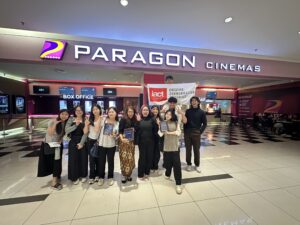
The award ceremony, held on 6 September 2026 at Paragon Cinemas, Taiping Mall, marked the culmination of the seven-week production project. The winning films will also continue to be showcased as part of the main festival programme in September, giving the emerging filmmakers further exposure to festival audiences and regional industry practitioners.
This matters because exposure changes the relationship students have with their work. A film is no longer simply something submitted for a grade. It becomes something that has to communicate, connect and stand on its own.
What Happens When Industry Trusts Young Talent?
The Raintown project also raises a broader question: what happens when students are trusted with a brief that carries real expectations?
Mr Timothy Chan, Chief Executive Officer of IACT College, described the clean sweep as an example of what can happen when academia and industry trust young talent. His comments point to an important part of industry-driven education. Students need guidance, but they also need room to make decisions for themselves.
The collaboration between IACT College, WCE and the Raintown Film Festival created that balance. There was a clear brief and an external platform, but the students retained creative freedom over the stories they wanted to tell.
Too much freedom can leave students without direction. Too much control can remove the experimentation that makes creative work meaningful. The challenge is finding the point where structure supports creativity rather than replacing it.
The Skills Behind the Screen
A finished film can make the process look simple. It rarely is.
Behind a short film are decisions about storytelling, directing, cinematography, sound, editing, production planning, communication and teamwork. Each part affects the others.
That makes filmmaking relevant beyond filmmaking itself. A student who learns to manage a production is also learning how to manage time and resources. A student who learns to communicate a creative idea is developing a skill that can be applied to advertising, digital media, communications and content creation.
This is reflected in IACT College’s wider industry-driven and project-based approach across broadcasting and film, digital media and communication, advertising, digital marketing, public relations, media studies and graphic design. The disciplines may be different, but many of the skills required to work effectively across them are shared.
The Raintown experience provides one example of those skills being tested in a real project, rather than only discussed in a classroom.
When Technology Changes, What Still Matters?
Creative industries are changing quickly. Artificial intelligence and new production technologies are changing how content can be researched, developed, produced and distributed.
But technology does not answer every creative question. It can make certain tasks faster. It can provide new ways to experiment. It can expand what a small team can do. It cannot decide what story is worth telling.
Mr Timothy Chan highlighted authentic visual storytelling as an important differentiator as creative industries evolve alongside emerging technologies and AI. That observation is particularly relevant for students entering an industry where the tools will continue to change.
Technical skills will remain important. But so will judgement, communication, collaboration, resilience and the ability to understand an audience. The tools may change. The need to make meaningful creative decisions does not.
A More Useful Definition of Creative Success
There is a temptation to treat the clean sweep as the end of the story. Three awards, three films, one institution. But the deeper story is more than that.
At the 3rd Raintown Film Festival 2026, three IACT College productions received recognition in the Raintown Horizons tertiary student competition. Off received the Best Student Short Film Award, while Before We Became Strangers and Nevertheless received Special Mention Awards.
More than 46 students worked across eight teams over seven weeks, developing original stories in response to an authentic industry brief. Along the way, they had to make decisions, revise their ideas, work within production timelines and respond to the realities of bringing a story from concept to screen.
This is where creative education becomes more than simply teaching students how to make films. It is about helping them make decisions when there is no perfect answer, work with people who may see things differently and adapt when the original plan has to change.
Perhaps creative success can therefore be understood through three simple questions.
Was the idea meaningful enough to communicate? Was the team able to bring that idea to life within the realities of production? And when the work left the classroom, could it stand on its own?